
The Bachelor of Science in Customs Administration develops graduates who possess the knowledge, skills, and ethical values needed to effectively manage and facilitate the movement of goods across international borders, ensuring compliance with customs regulations and promoting trade facilitation.
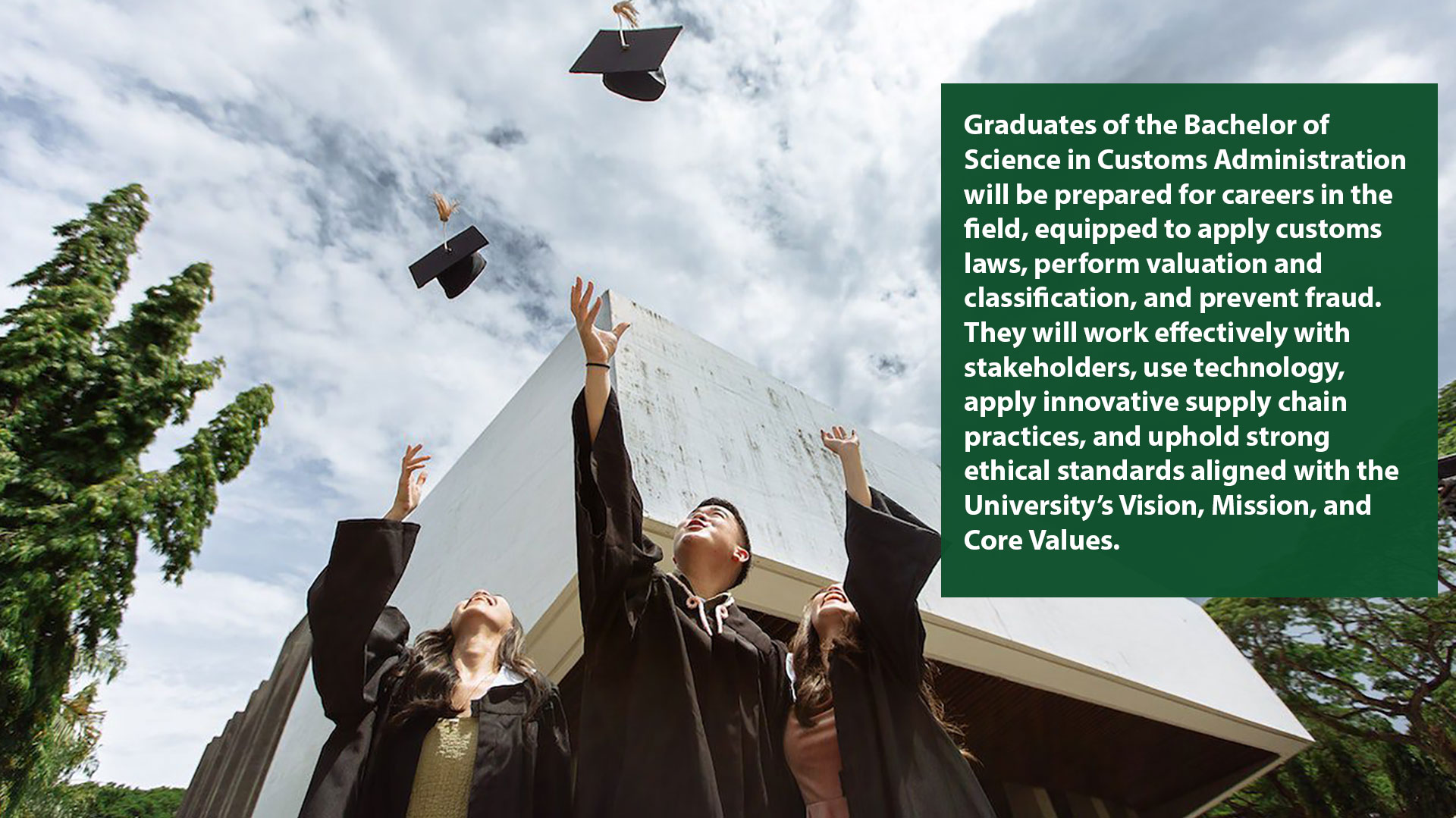
Rooted in strong knowledge, skills, and values, the BS in Customs Administration program prepares graduates for professional practice in customs, logistics, and supply chain. They develop a solid foundation in trade laws and regulations, qualify as licensed Customs Brokers through the Professional Regulation Commission and Professional Regulatory Board for Customs Brokers, and apply their expertise in real-world settings or further studies. Graduates are equipped to work independently or in teams, demonstrating competence and professionalism with minimal supervision.
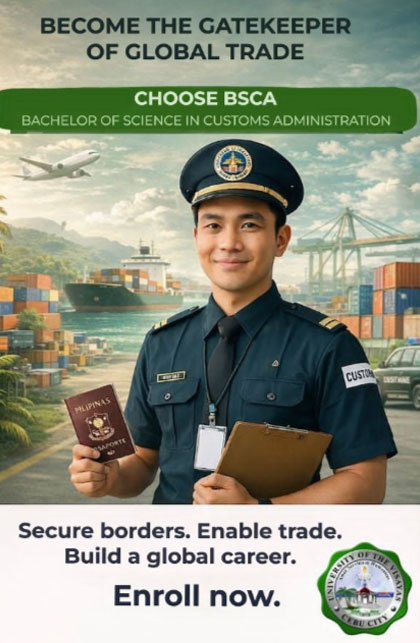
Bachelor of Science in Customs Administration
COLLEGE OF BUSINESS ADMINISTRATION
Why choose our BS in Customs Administration Program?
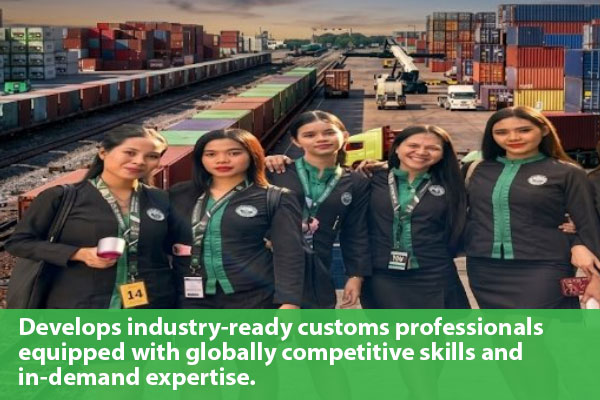
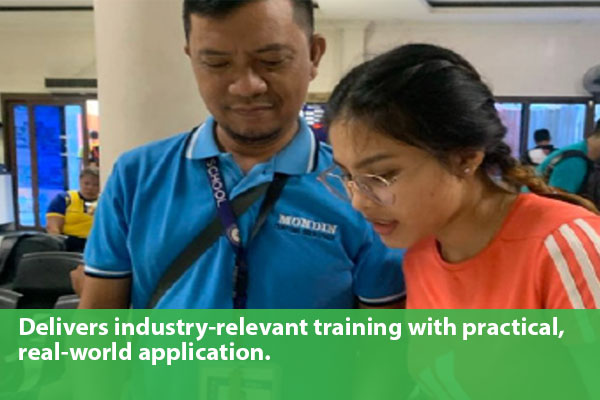
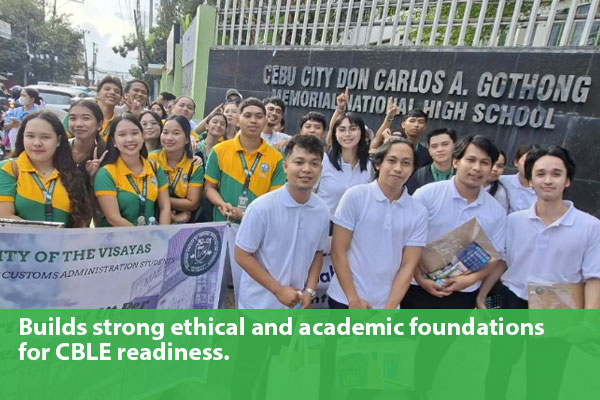
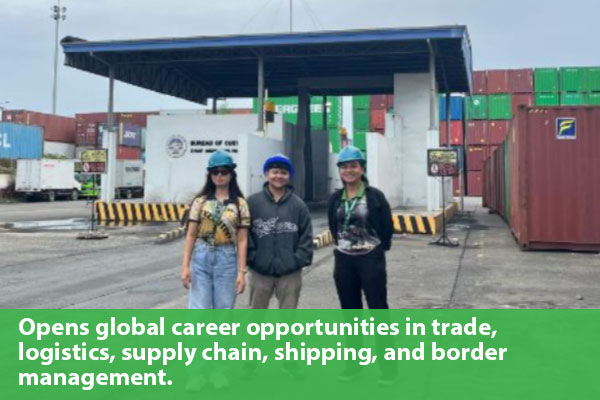
Program Credibility
Your future begins with a program that meets national & international standards


Your future begins with a program that meets
national standards.
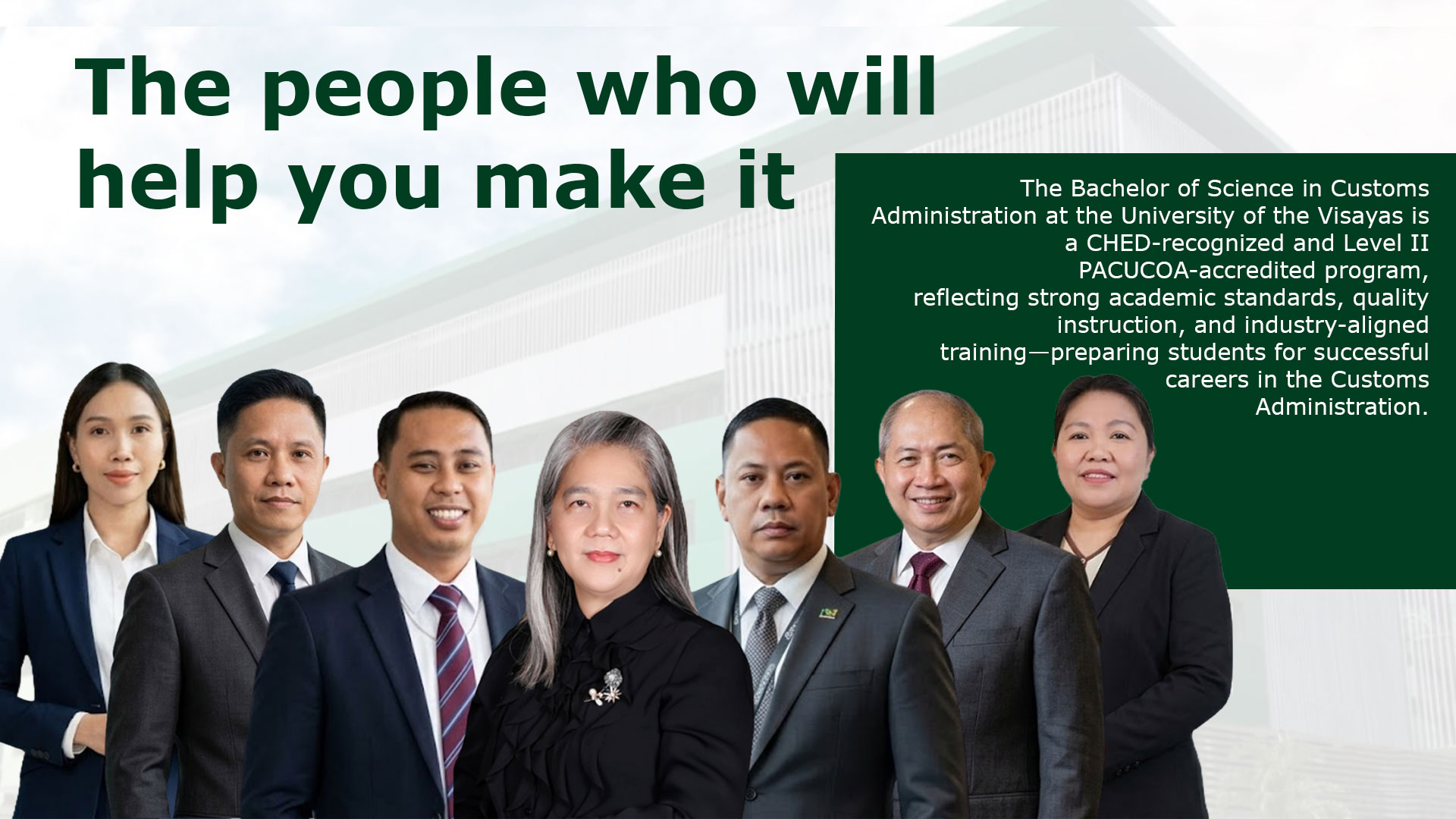
The Bachelor of Science in Customs Administration at the University of the Visayas is a CHED-recognized and Level PACUCOA-accredited program, reflecting strong academic standards, quality instruction, and industry-aligned training—preparing students for successful careers in the hospitality field.
- Accredited by the Commission on Higher Education (CHED)
- LEVEL II Accredited by the Philippine Association of Colleges and Universities
- Commission on Accreditation (PACUCOA)
- ISO 9001-2015 Certified Quality Management System
- Academic Partner of EASTWEST International for Micro-Credential Courses
The competencies you can develop
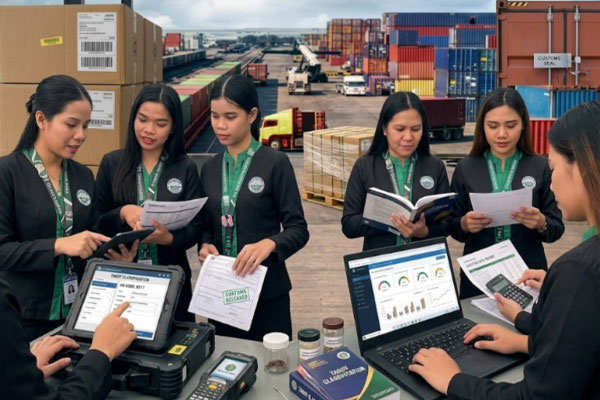
Technical Competencies
The Bachelor of Science in Customs Administration (BSCA) builds core technical competencies centered on the legal and logistical complexities of international trade. Mastering the Tariff Classification using the Harmonized System and Customs Valuation via WTO principles to ensure precise tax assessments. Graduates possess a deep command of Customs Law, trade agreements, and the practical execution of Import/Export Procedures. Beyond regulatory compliance, the program instills expertise in Logistics and Supply Chain Management, risk mitigation, and taxation. This technical foundation is rounded out by Digital Literacy, enabling professionals to navigate automated customs systems and electronic data platforms essential for modern, globalized commerce.
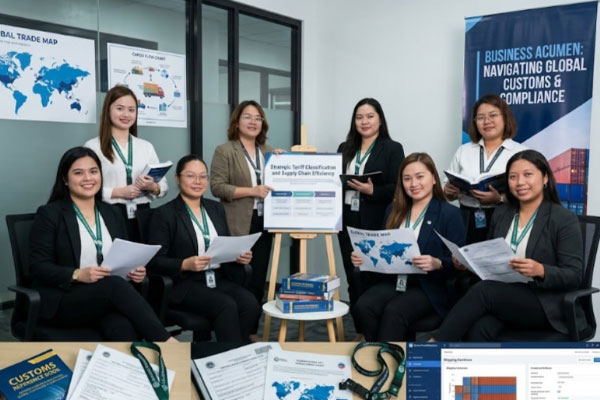
Business Acumen
Developing business acumen for a BS in Customs Administration involves integrating foundational business principles—such as economics, finance, and management— with specialized technical expertise in international trade, supply chain logistics, and customs law. Success in this field requires more than just understanding regulations; it demands the ability to analyze the financial and legal impact of trade decisions, master the complexities of import/export documentation, and apply critical thinking to mitigate operational risks. By blending these core competencies with strong communication skills and a global perspective on intercultural trade, customs professionals can effectively navigate the regulatory landscape to drive organizational growth and ensure seamless international commerce.
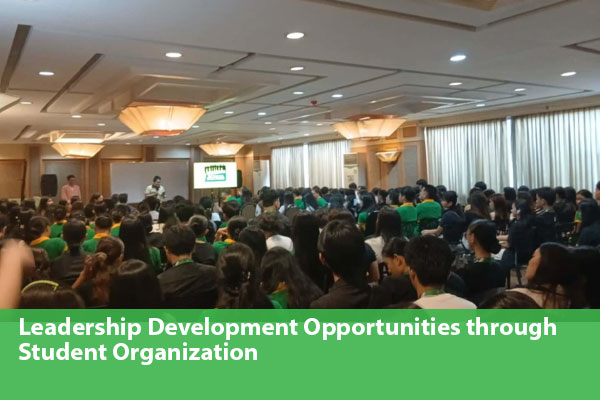
Leadership and Governance
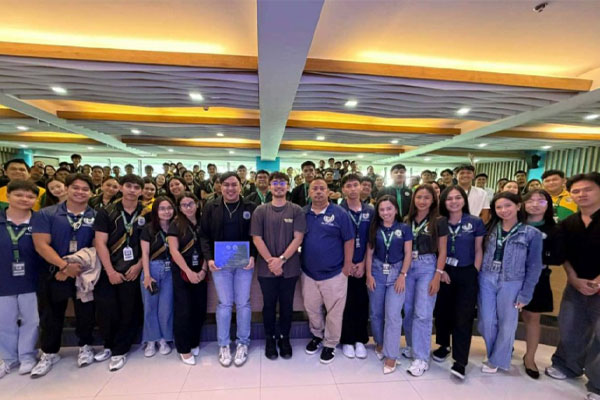
Effective leadership and governance in a BS Customs Administration (BSCA) program serve as the strategic foundation for developing ethical, high-performing licensed Customs Brokers who act as vital gatekeepers of the national economy. By aligning rigorous academic curricula with international standards like the Revised Kyoto Convention and the CMTA, leadership ensures that graduates are technically proficient in trade facilitation, revenue collection, and border protection. This governance framework integrates technological advancement and stakeholder engagement, fostering a culture of transparency and risk management that prepares future professionals to navigate the complexities of the global supply chain with integrity.
Information and Communications Technology
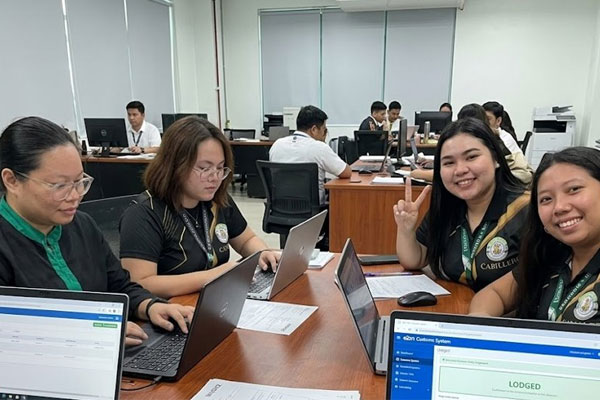
Information and Communications Technology (ICT) serves as the digital backbone of the BS Customs Administration program, transitioning the field from a paper-heavy environment to a streamlined, data-driven discipline. By integrating sophisticated tools like Electronic Data Interchange (EDI), Single Window Systems, and blockchain, ICT enables future customs brokers to automate trade declarations and enhance supply chain security through immutable digital ledgers. These technologies, paired with AI-driven risk management and non-intrusive inspection software, reduce human intervention and physical contact, thereby increasing revenue accuracy while minimizing opportunities for corruption. Ultimately, mastering this digital architecture shifts the professional role from a traditional document handler to a strategic logistics expert capable of navigating the complex, high-speed demands of modern global trade.
Ethics, Integrity and Accountability
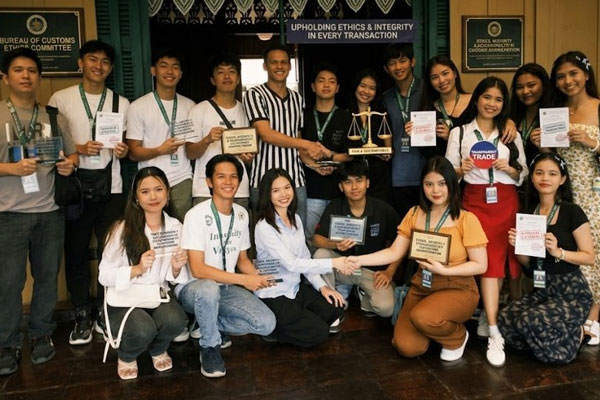
Ethics, integrity, and accountability serve as the moral foundation of customs administration, acting as a critical deterrent against corruption and the shadow economy while ensuring national fiscal stability. By adhering to professional standards such as neutrality and confidentiality, customs programs utilize automation and transparent procedures to minimize bribery and revenue leakage. This framework of accountability—enforced through internal audits and external oversight—transforms integrity from a personal virtue into a powerful trade facilitation tool that reduces clearance times, maximizes state revenue, and fosters an environment conducive to foreign investment and secure global trade.
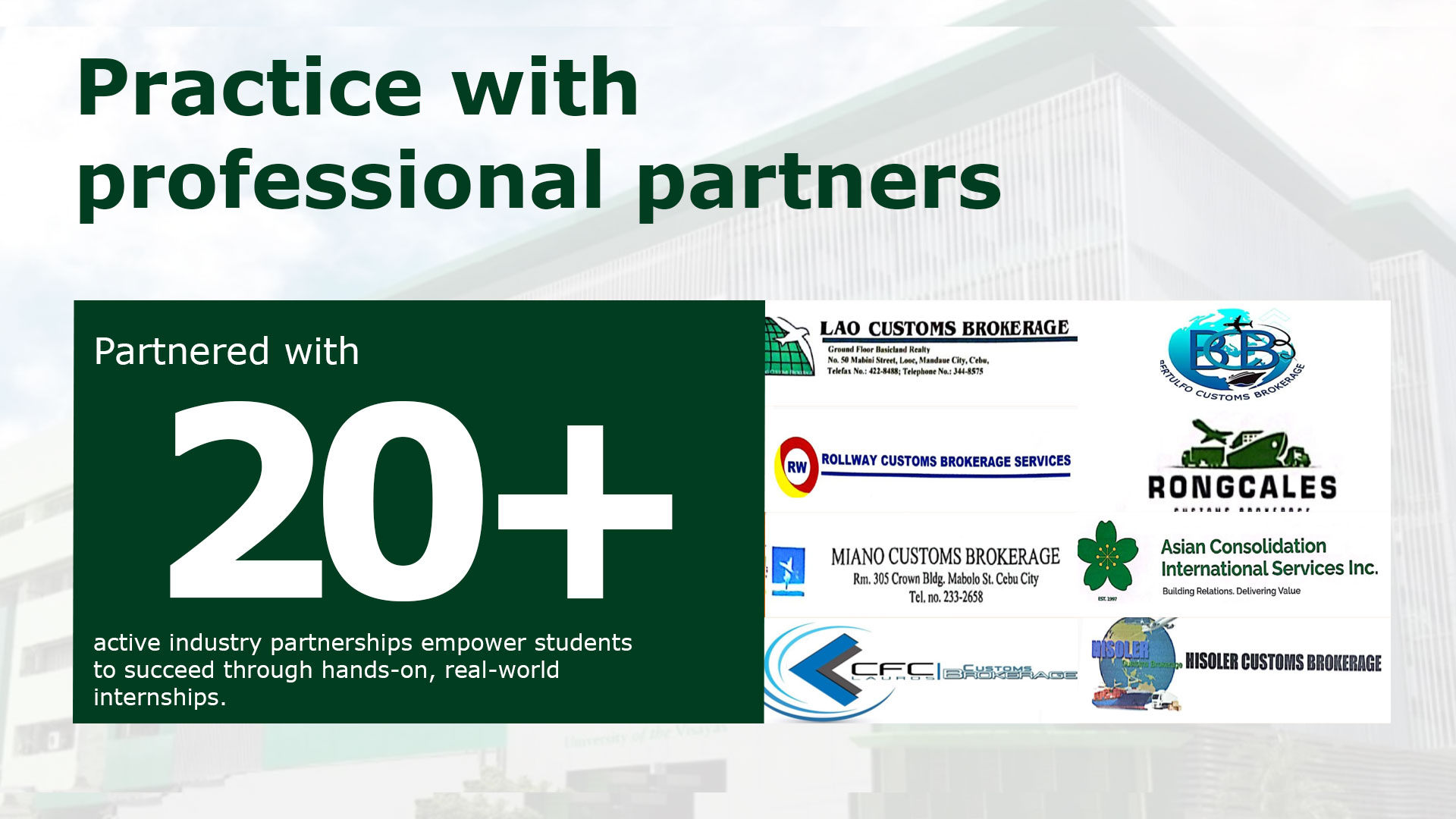
Hear it from them!
Discover firsthand experiences from our students during their On-the-Job Training.
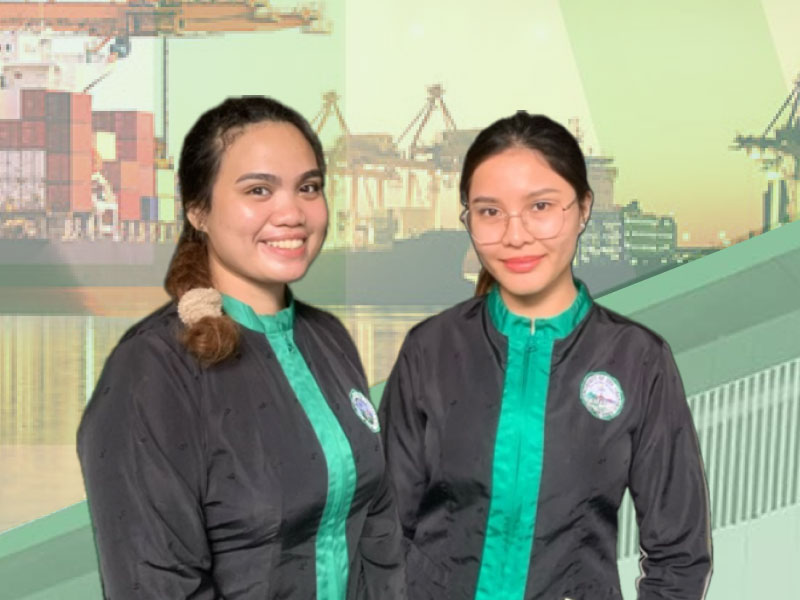
Nena Mae Apas and Nathalene M. Sta. Ana
PRM Customs Brokerage Services
Practicum is the best known technique that ties together academic learning and the real world. Academic theories provided us the basic foundation that guides our conceptualization of the profession. On the other hand, practicum provides pragmatic experience that is less likely encountered in universities. It helped us gain better insight in customs brokerage, broadened our perspective on different aspects of trade, and pragmatically honed our skills.
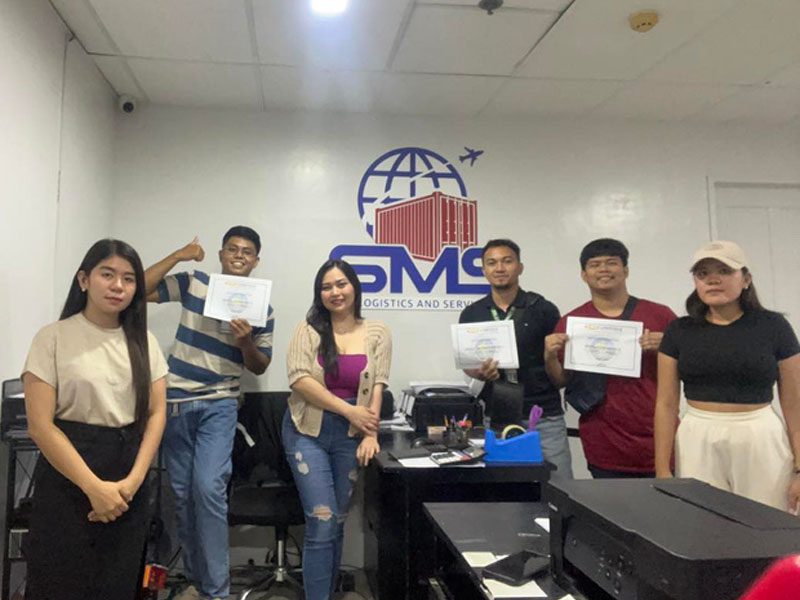
Klein Azhley Nuevo, Mark Anthony Tano, Stephen Surilla and Jhomar Niel Ramos
SMS LOGISTICS AND SERVICES
Working alongside experienced customsofficers, we had the opportunity to collaboratewith various departments, enhancing ourteamwork and communication skills. Thisexposure also helped us grasp the importanceof efficiency and attention to detail in thecustoms process. Overall, our OJT at BOCprovided us with invaluable insights intocustoms operations, trade compliance, and theglobal supply chain.
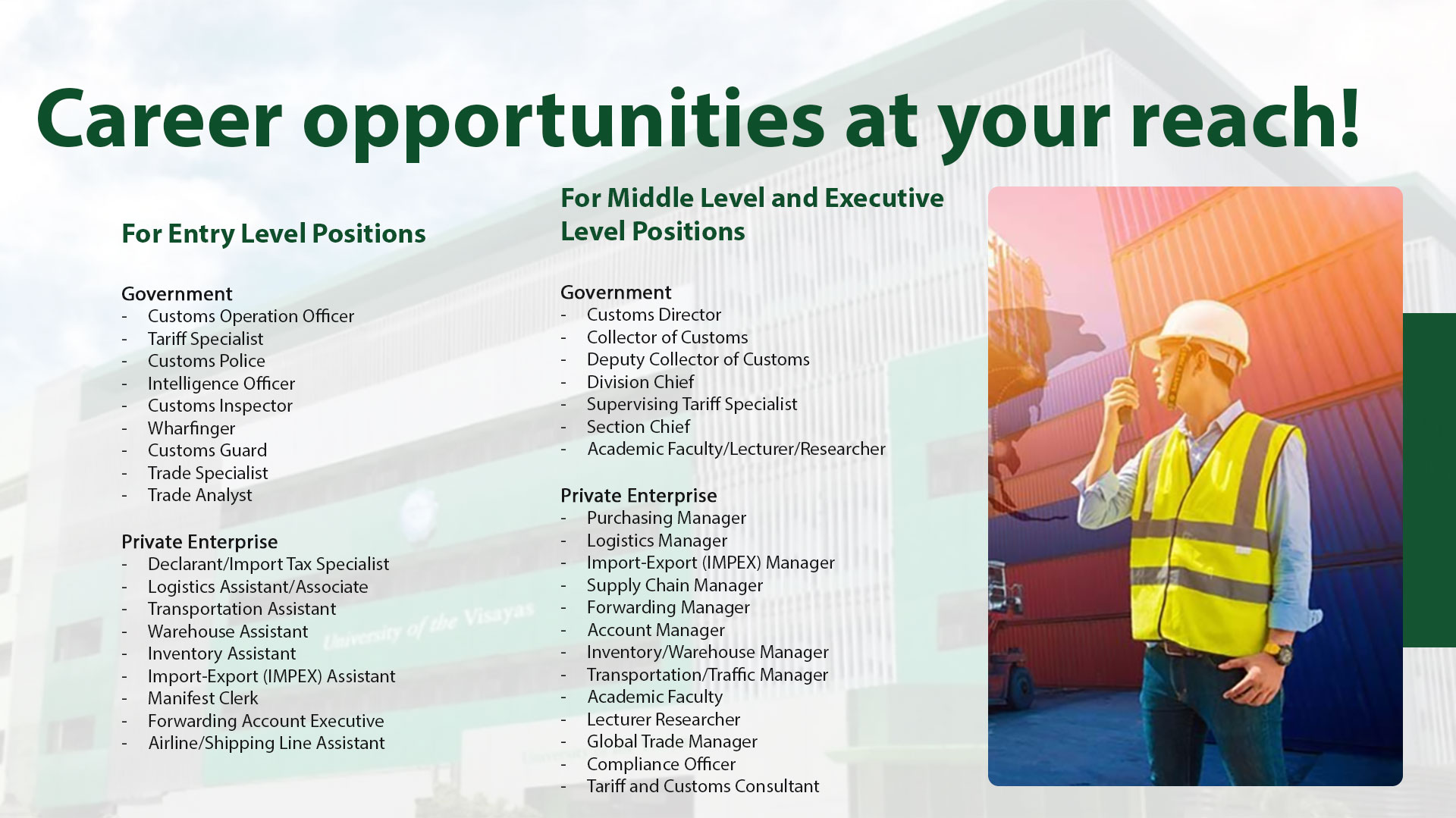
Interested? Explore our curriculum
Revised Curriculum, Effective 1st Semester, AY 2022-2023 Per CMO No. 27, Series of 2017
CurriculumBegin your journey with us!
Enroll Now
JOIN US AND BUILD YOUR FUTURE!
At University of the Visayas, we take pride in offering quality training programs that open doors to exciting career opportunities. Join us, and let's build your future together. For more information and enrollment details, contact us today. Your journey to a successful career starts here!